Growth
2026 Catering Growth: The Real Numbers Behind the Boom
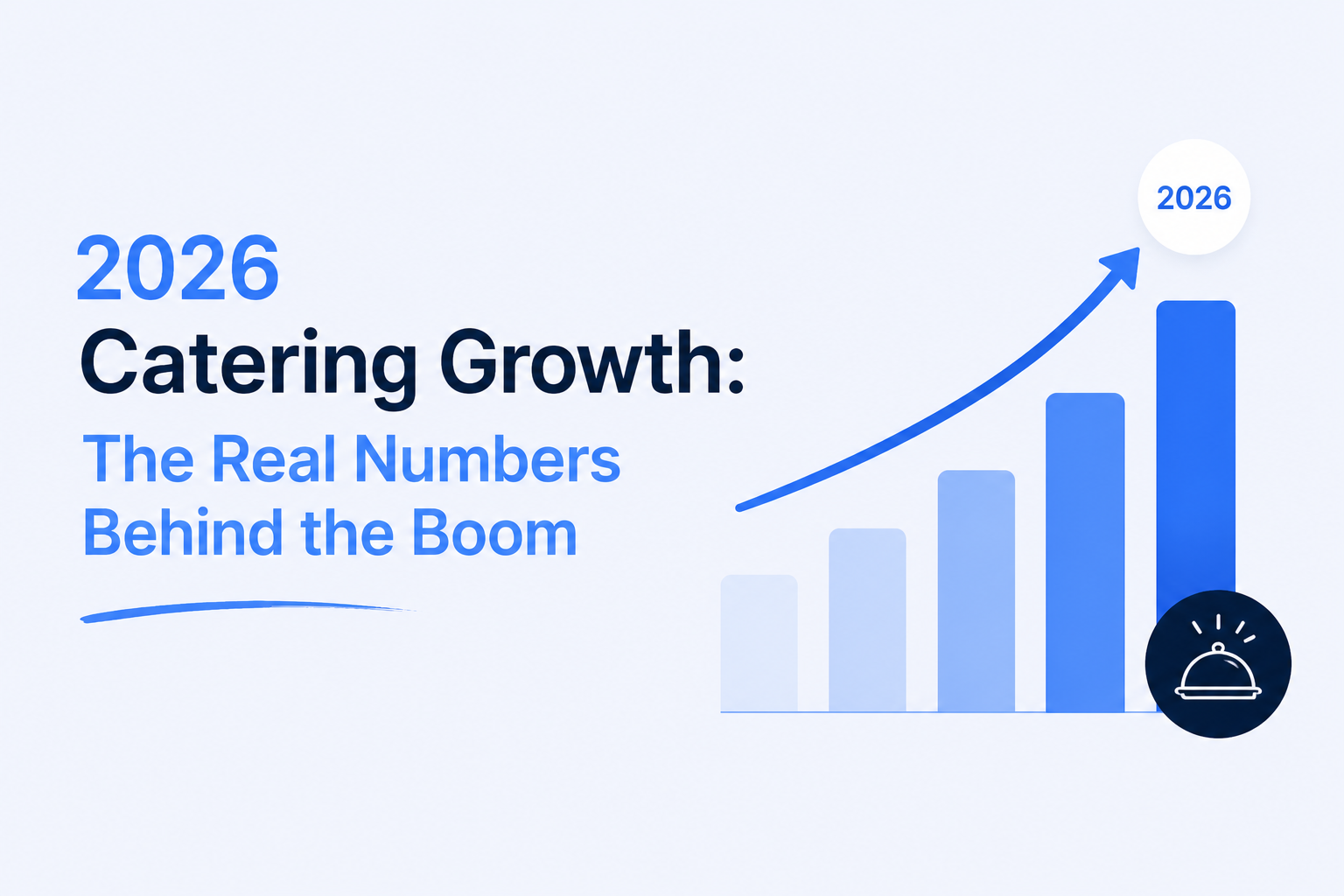
Catering is no longer a side menu. In 2026 it is the fastest growing meal occasion in US food service, and the gap between the operators capturing it and the ones missing it has never been wider.
This post walks through the numbers, the dynamics behind them, and where most independent restaurants are still leaving margin on the table.
How big is the US catering market in 2026?
Industry analysts size the US catering market at roughly $73 to $80 billion in 2026, growing at 4 to 6 percent annually. That makes it one of the few food service segments still expanding faster than inflation.
The split between B2B (corporate, office, events) and B2C (parties, weddings, family events) is roughly 60 to 40. B2B drives more revenue per order; B2C drives more frequency.
A few useful baselines from public industry reporting:
- Average B2B corporate catering order: roughly $350 to $500 in 2026
- Average B2C event order: closer to $180 to $250
- Repeat rate on B2B accounts: 60 to 80 percent within 90 days when follow-up is in place
- Repeat rate without structured follow-up: closer to 25 percent
The last two numbers are the most important on the page. The single biggest delta between operators winning catering and operators struggling is whether they have a system that follows up.
What is driving the growth?
Three forces, in order of impact.
Return to office, with new rules
Most large US employers settled into a 3 to 4 day in-office cadence by 2026. Catering on those specific days (Tuesday, Wednesday, Thursday) is the new normal. Office managers are placing standing weekly orders. Tuesday lunch has quietly become the largest single-meal occasion of the week in most B2B catering operations.
Corporate amenities replacing benefits
With companies pulling back on salary growth, catered meals became a low-cost perk that retains hybrid workers. The math works for the buyer because catering at $25 a head once or twice a week is cheaper than meaningful comp adjustments.
Hybrid celebrations
Weddings, birthdays, and corporate offsites are smaller and more frequent than pre-2020. The average B2C catering event in 2026 serves 22 guests, down from 35 a decade ago. The number of events is up. Operators that can handle small-format orders efficiently win this segment.
Which segments are growing fastest?
The fastest growth is in three places:
- Office lunch programs (recurring B2B with predictable cadence)
- School and education catering (graduation, sports banquets, parent events)
- Boutique events under 30 guests with high per-head spend
The slowest growth is in classic large-event catering (conferences over 200, conventions). Those have stabilized below pre-2020 levels.
Where are independents losing share to chains?
Multi-location chains are growing catering revenue at roughly 1.5 to 2 times the rate of single-location restaurants. The reason is not menu quality. It is operational consistency.
When a corporate buyer places a recurring order for 8 weeks in a row, they want the same delivery time, the same packaging, the same point of contact. Chains deliver that. Most independents do not.
The gap is closing for operators that adopt structured catering software, because the operational consistency they could not afford to build manually is now buyable.
What separates the operators winning catering today?
From what we see across the operators running serious catering programs, four traits show up every time.
- They treat catering as a product, not an upsell. Separate menu, separate pricing, separate phone or chat line, separate operations.
- They follow up on every order, every time. Within 2 hours of delivery. We wrote an entire post on why this window matters.
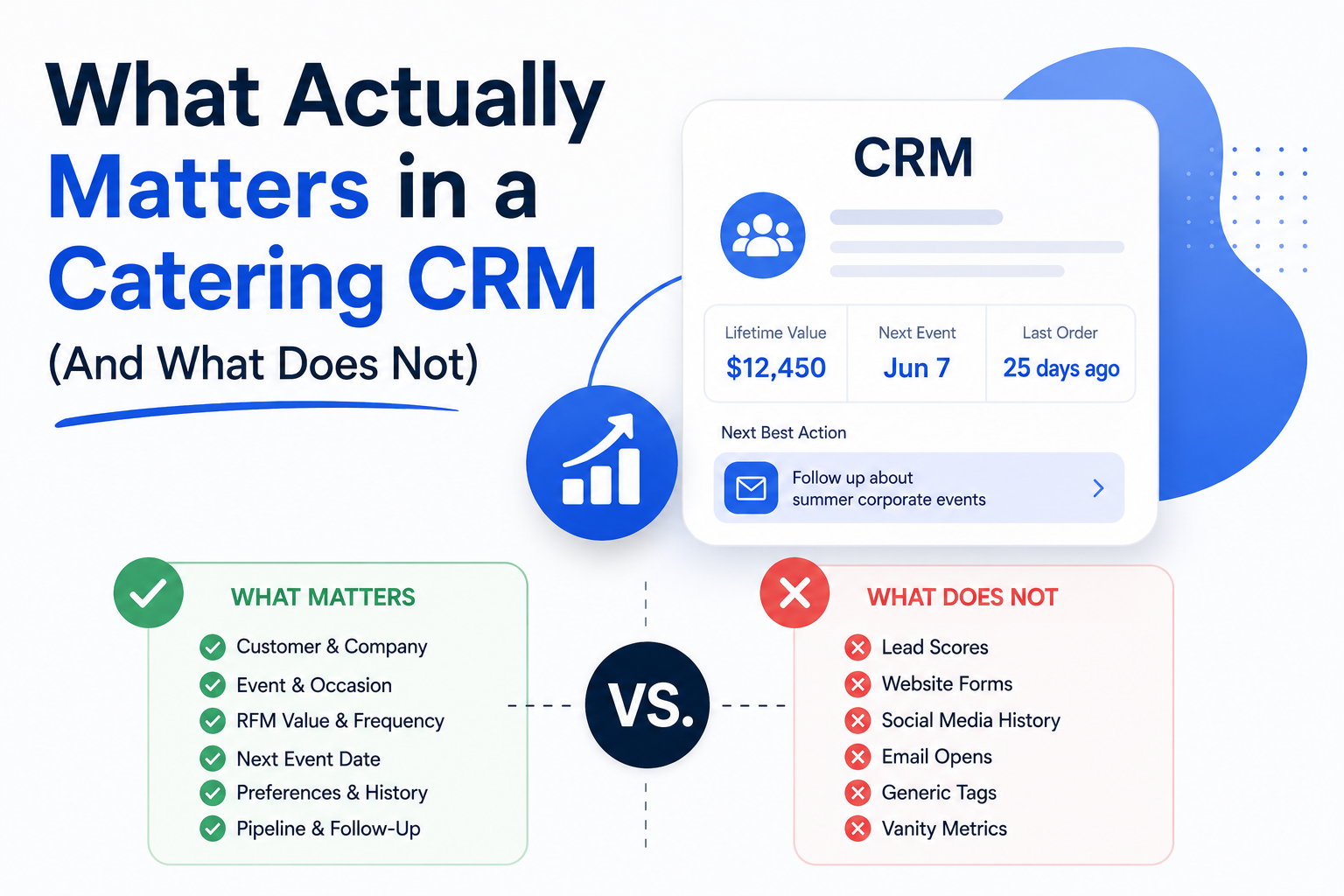
- They run a real CRM, not a spreadsheet. Names, dietary restrictions, average order size, last order date, preferred channel. A CRM that fills itself makes this practical for operators of any size.
- They sell to companies, not just individuals. A B2B account placing weekly orders is worth 50 to 100 individual customer interactions.
Key takeaways
- US catering will clear ~$80B in 2026, growing 4 to 6 percent per year.
- Tuesday lunch is the single biggest meal occasion of the B2B catering week.
- Repeat rate doubles or triples when structured follow-up is in place.
- Multi-location chains are growing catering 1.5 to 2 times faster than independents, mostly because of operational consistency.
- The operators winning catering treat it as its own product with its own systems.
If your catering program is growing but messy, the constraint is almost never the food. It is the operating system around it. That is what AIA was built to solve.