AI
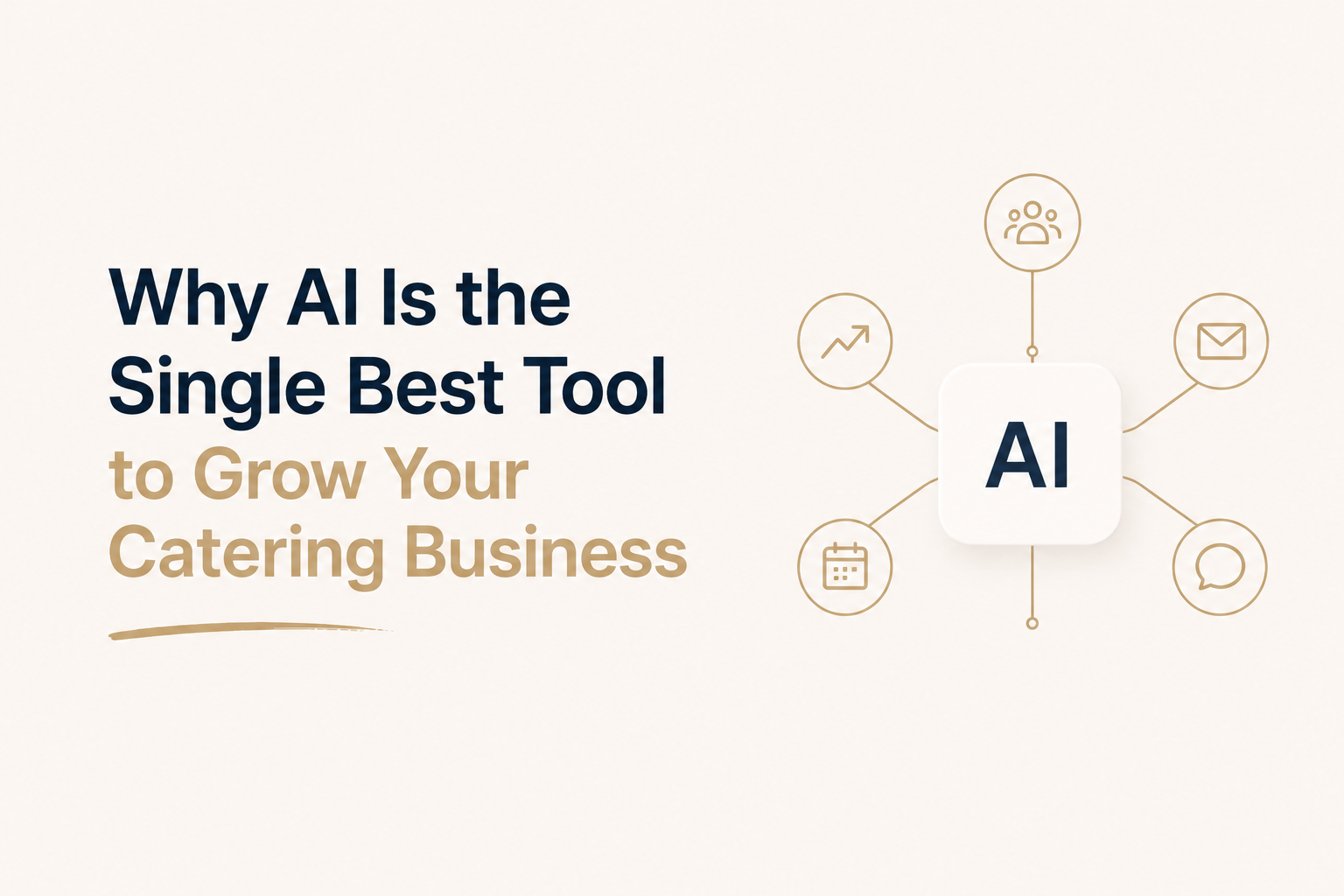
Why AI Is the Single Best Tool to Grow Your Catering Business
Most catering operators have already tried the standard growth playbook. Run ads on Google. Hire a sales rep. Sign up for a marketplace. Some of it works, all of it has a ceiling, and every channel gets more expensive over time.
AI is different. It is the only growth tool that gets cheaper per dollar of revenue every quarter you run it, because the cost is flat and the output compounds.
This post explains why, where AI returns the most in a catering operation, and how to start without rebuilding your stack from scratch.
Why is AI more valuable than another marketing channel?
Ads, marketplaces, and sales hires share one trait: every additional dollar costs about the same as the last one. CPM goes up over time, commissions are flat, salaries grow.
AI inverts that. The first dollar trains the system, the next dollars scale the output. A model that learns your menu, your customers, and your patterns delivers more value the longer it runs. By month 12 it is doing work that would have cost 5 to 10 times more in headcount.
That is the structural advantage. Now the specific applications.
What does AI actually do for a catering operation?
Five use cases, in rough order of revenue impact.
1. Capture orders from any channel automatically
A customer texts at 11pm asking for 30 boxed lunches for Tuesday. A corporate buyer emails a PDF order form. A web visitor starts a chat. Without AI, all three need a person, and the late ones get missed. With AI, all three become structured orders without anyone touching them.
2. Build the CRM as a side effect of working
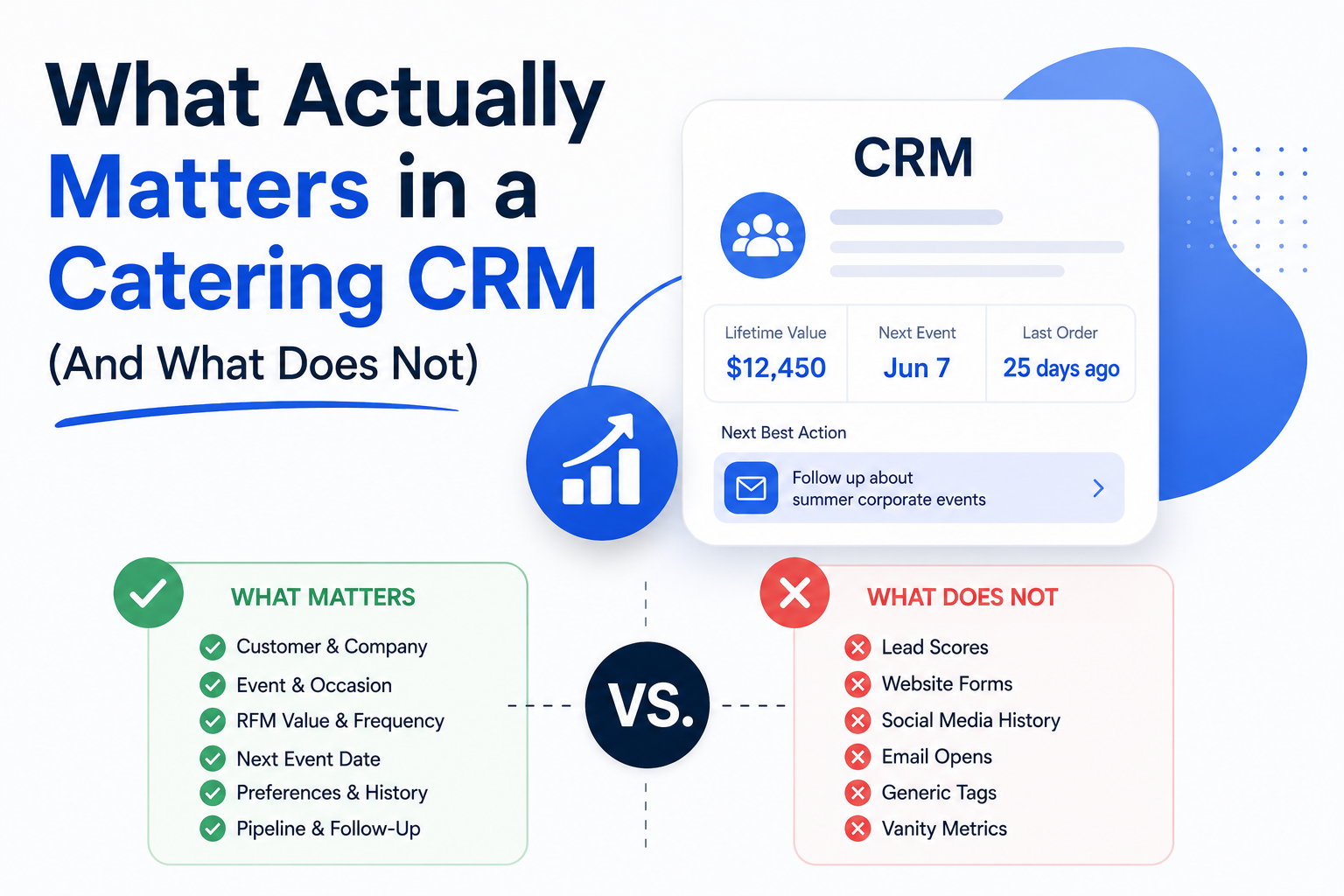
Every interaction becomes a customer record. Contact info, preferences, dietary restrictions, order history, channel, language pattern. No data entry. By month 3 you have a CRM richer than anything you would have built manually.
3. Read the data and tell you who to sell to next
This is the part most operators do not realize is possible. An AI looking at your order history can identify which customers are about to churn (and have not), which buy together (and could be cross-sold), and which look like your VIPs (and are still small accounts). That is AIA Insight.
4. Follow up automatically across the right channel
Follow-up is the single most leveraged action in catering. AI makes it free. Every order gets a message in the customer's preferred channel within hours. Sentiment is scored. Negative replies route to a human. Positive replies trigger a reorder offer.
5. Generate marketing content on demand
Product photos, social posts, menu descriptions, campaign drafts. What used to take a marketing freelancer 4 hours and $400 takes Ask AIA 30 seconds and pennies.
Where does AI return the most revenue?
In order of return, based on what we see across catering operators:
- Reactivating lapsed customers (typically 15 to 30 percent revenue lift in year one)
- Cross-selling existing customers (10 to 20 percent average order value increase)
- Capturing orders during off-hours (5 to 15 percent volume increase from nights and weekends)
- Reducing administrative labor (saves 10 to 20 hours per week per location)
The first one is usually the surprise. Most operators do not realize how many of their customers stopped ordering and never told them. An AI that reads the customer list and surfaces the ones at risk is worth more than any new lead source.
What does it not do?
Three things, important to be honest about.
- It does not replace your chef or your hospitality. Food still matters more than software.
- It does not magic up demand that is not there. If no one in your area wants catering, AI will not invent that.
- It does not work without clean data. Some operators try to bolt AI onto a fragmented stack of POS, CRM, and email tools. The integration tax eats most of the gain. AI works best when the data lives in one platform.
How do you start without a big budget?
Three practical steps that cost very little.
- Centralize the customer interactions. Pick one channel to consolidate first (usually email or WhatsApp). Get every customer interaction into one inbox.
- Capture one structured profile per customer. Even a simple spreadsheet with name, email, last order, total spend, dietary notes is a starting point.
- Layer AI on top of step 2. This is where a platform like AIA replaces the manual work, because it builds the CRM automatically and runs the follow-up and analytics without an integration project.
The operators who started with steps 1 and 2 in 2024 are now compounding. The ones still managing catering out of a shared inbox in 2026 are losing share to them every quarter.
Key takeaways
- AI is the only growth lever where unit economics improve with scale.
- The biggest revenue gains come from reactivation and cross-sell, not new leads.
- AI capturing off-hours orders and automating follow-up usually pays for itself in month 1.
- The biggest constraint is fragmented data, not lack of AI tools.
- Start by consolidating customer interactions, then layer AI on top.
If you want to see what an AI-native catering operation looks like end to end, request a demo and we will walk through your numbers.