Operations
How to Price Catering Without Leaving Margin on the Table
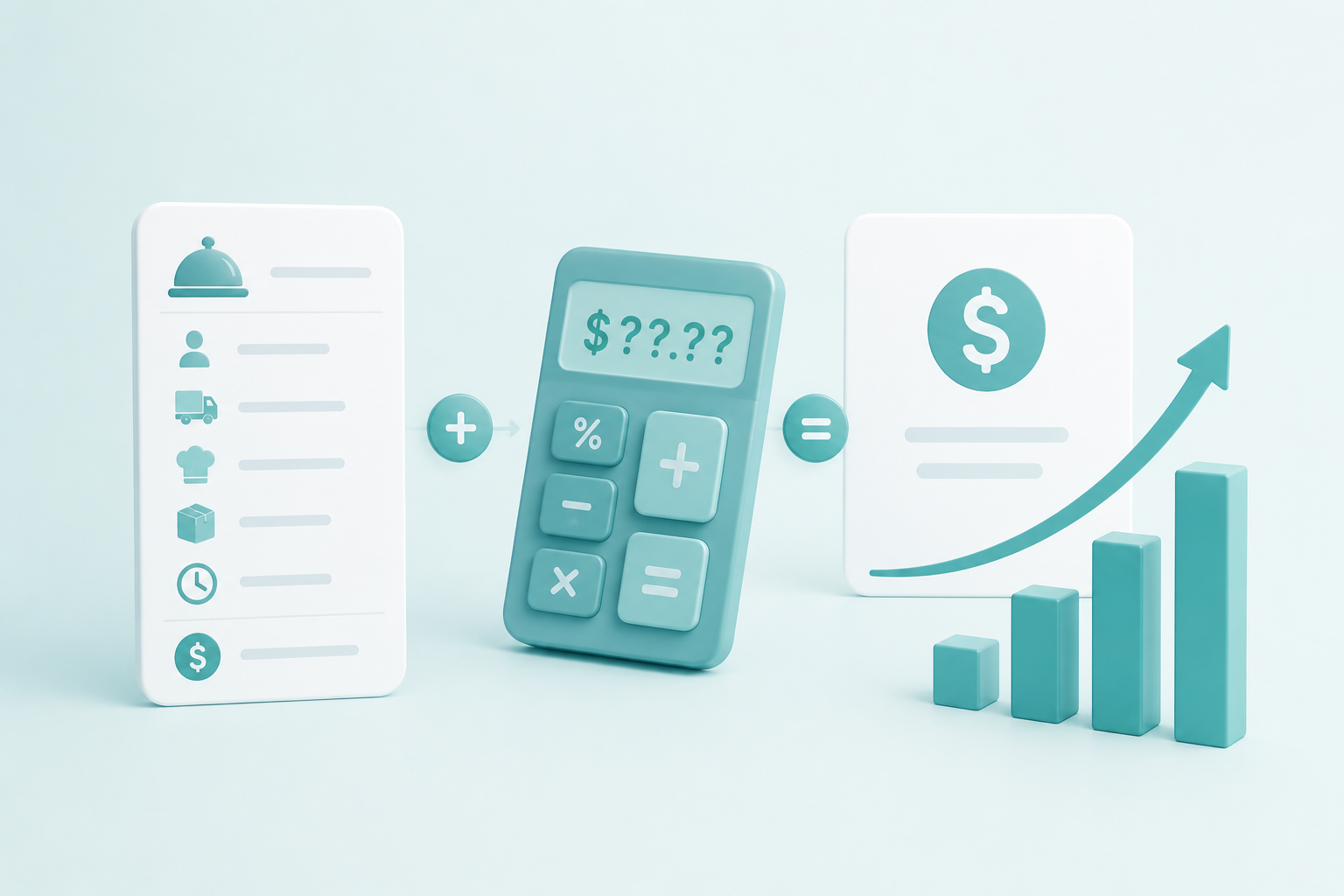
Most catering operators price like restaurants: food cost times 3 to 4, add a small delivery fee, call it the menu. Then they discover at the end of the year that the catering side of the business made half the margin the dine-in side made on the same food.
The reason is that catering has a much longer list of hidden costs, and most operators bake in only the obvious ones. Underpricing is the default. This post walks through the real cost stack, the pricing model that protects margin, and the negotiation patterns that work in B2B without sacrificing the floor.
Why do catering operators systematically underprice?
Three reasons.
Pricing pressure from buyers
B2B buyers are professional negotiators. They quote competitors at you. Most operators flinch and discount before defending value.
Mental model from dine-in
Food cost is the only cost the operator instinctively prices around. Catering has many other costs that dine-in does not have.
Fear of losing the deal
Operators would rather take the order at a thin margin than risk the customer walking. Over thousands of orders this is how a catering operation loses money quietly.
What are the hidden costs most miss?
Nine costs that compound. Most catering price tags miss at least five.
1. Food cost (the obvious one)
Direct ingredient cost. 25 to 32 percent of menu price is typical.
2. Packaging
Clamshells, trays, utensils, napkins, serving spoons, sterno fuel, table covers. Real cost: 3 to 7 percent of menu price for a typical corporate lunch. Higher for upscale.
3. Insulated transport
Hot bags, cold bags, racks. Amortized cost per order: $1 to $3.
4. Driver labor
Driver wage plus benefits, divided by orders per shift. Real cost: $8 to $25 per delivery depending on distance and complexity.
5. Setup labor (if you do it)
If you provide setup, that is 30 to 60 minutes of labor at the customer site. $15 to $40 per order.
6. Payment processing
Stripe, Square, or POS processor charges 2.6 to 3.5 percent of the order value. NET 30 and corporate billing has its own cost (financing, AR labor, default risk).
7. Marketplace commission (if applicable)
ezCater, Hangry, etc.: 15 to 35 percent of the order value. Often the single biggest hidden cost.
8. CRM / software / tools
If you bake the cost of your software stack into each order, it is usually 1 to 3 percent. Worth knowing but not the biggest driver.
9. Risk and replacement reserve
Mistakes happen. Replacements, refunds, partial credits. A real operation budgets 1 to 3 percent of revenue for service recovery.
Add the percentages up: food (28%) + packaging (5%) + transport (1%) + driver (5%) + setup (3%) + processing (3%) + marketplace IF applicable (20%) + software (2%) + recovery (2%) = roughly 49 to 69 percent of revenue.
That leaves 31 to 51 percent gross margin in the best case. Then back out kitchen labor, rent, utilities, sales/marketing, owner take, and you discover why catering with thin pricing is unprofitable at scale.
What pricing model actually works?
Three principles.
1. Price the package, not the item
Individual menu pricing leaks margin. A package ("Mediterranean Lunch for 25, $475 all-in including delivery and setup") gives you control over the bundle and reduces buyer haggling on each line item.
2. Set a delivery floor
Do not deliver below a minimum order value. The math fails. $150 minimum is a healthy floor for most metros. $250 for high-cost zones.
3. Tier pricing by complexity and timing
- Standard order at standard timing: base price
- Last-minute (under 48 hours): +15 to 25 percent
- Weekend or holiday: +20 to 35 percent
- Multiple delivery locations: per-location fee, $35 to $75 each
- White-glove setup: +10 to 15 percent of order
These surcharges are not greedy. They reflect real cost. Buyers accept them when explained.
How do you handle B2B price negotiation?
Four rules.
Have a floor and defend it
Know your real margin floor. Below it, walk away. Operators who never walk away always end up at the floor.
Trade non-price concessions before discounting
If the buyer pushes price, offer a non-price concession first: longer payment terms, faster confirmation, free packaging upgrade, additional setup support. These cost you less than discount dollars cost.
Volume commits before volume discounts
A buyer asks for 10 percent off because they will order monthly? Get the commit in writing, 6 months minimum, before the discount applies. A discount on a hoped-for volume is just a discount.
Show the math, do not just discount
If you have to discount, do it transparently. "Our standard package is $475. For a 6-month commit at $400 per order, I can hold $440. Below that I lose money on each event and have to pull back service." The customer understands. They negotiate against the math, not against you.
When should you raise prices?
Most operators wait too long. Three signals that mean it is time.
- Capacity is constrained. You are turning away orders or struggling to deliver on time. Raise prices 8 to 12 percent. The marginal customer will say no, freeing capacity.
- Margins are below 25 percent gross. Something has to give. Either cut a hidden cost or raise prices.
- You have not raised prices in 18+ months. Inflation alone has eroded your real margin. A 4 to 6 percent annual price increase keeps you flat in real terms.
B2B contract customers should get 30 to 60 days notice on any increase, with a personal explanation. B2C catering can adjust the public menu directly.
Key takeaways
- Real catering cost stack is 49 to 69 percent of revenue before fixed overhead. Most pricing misses the hidden 20 to 30 percent.
- Price packages, not items. Set a delivery floor. Tier for complexity and timing.
- In B2B negotiation, trade non-price concessions before discounting.
- Volume commits before volume discounts. Always.
- Raise prices when capacity is constrained, when margin is below 25 percent, or every 18 months minimum.
If you want a CRM that tracks your real gross margin per order and per customer (not just the headline price), request a demo.