Operations
Multi-Location Catering: How One Manager Can Run 11 Stores
The traditional rule of thumb in restaurant catering is one dedicated catering manager per location. The manager owns the orders, the calendar, the customer relationships, the kitchen scheduling, the delivery dispatch, and the follow-up. At a 10-store chain that means 10 catering managers, plus overhead.
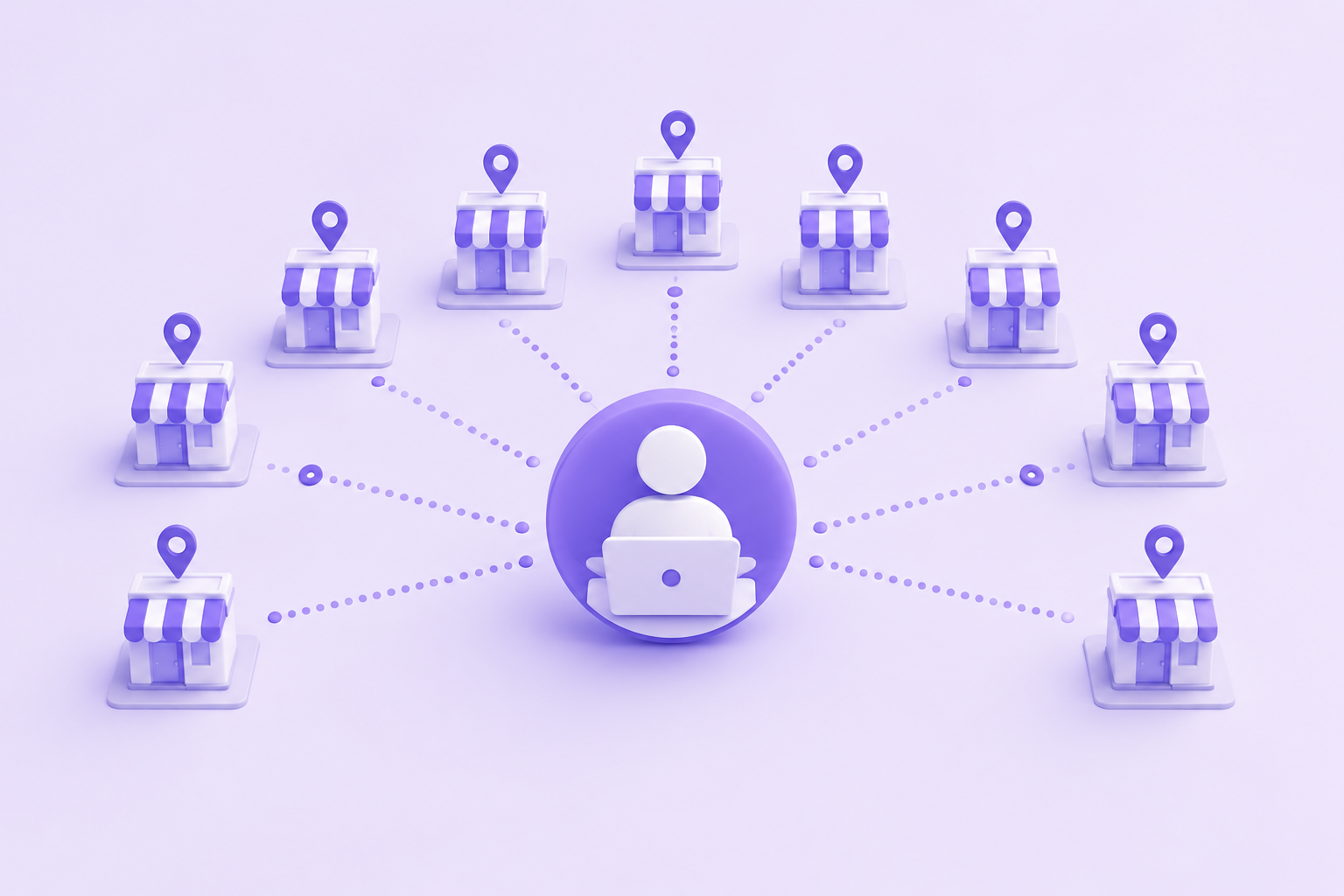
With a unified operating system, that ratio shifts dramatically. The Pincho pilot we work with runs 11 stores across two states with one catering manager. The kitchens still need staff, but the catering management function consolidated 10 to 1.
This post walks through what makes that math work, what the manager actually does day to day, and what each store still has to handle locally.
Why does multi-location catering usually need one manager per store?
Four reasons, all rooted in fragmentation.
Order intake is local
Each store has its own phone number, its own email inbox, sometimes its own website form. Orders land at the store level. Someone has to triage them.
Customer relationships are local
The office manager who orders weekly from your Coral Gables location does not know your Doral location exists. The relationship lives between two specific people.
Operations are local
Menu varies by location. Pricing varies. Capacity varies. Delivery zones vary. A manager has to know all of this for their store.
Follow-up is local
If each store does its own follow-up, only that store's manager has the context.
None of these are technological constraints. They are constraints of fragmented tooling.
What changes that math?
Five shifts.
1. Centralized order intake across all stores
All catering orders, from all channels, for all locations, flow into one unified inbox. The manager sees them in one place, color-coded by destination store. No more triaging across 10 phone lines.
2. Unified customer database
The office manager who orders from Coral Gables is the same customer who could order from Doral. The unified CRM holds the relationship at the brand level, not the store level. A regional account manager can see the full picture.
3. Recurring orders templated and automated
The Tuesday lunch program for Acme Corp does not need a human to assign it to a kitchen each week. It is templated once, runs on the calendar, and dispatches to the correct store automatically based on the delivery address.
4. Local kitchen + central management
The kitchen at each store still prepares the food. The manager at the brand level coordinates the customer and the order. The kitchen lead at the store handles the day-of execution. Two distinct roles, not one.
5. Real-time visibility per store
The central manager can see at any moment: what orders are coming today at each store, who is on capacity, who has open windows. They can shift load proactively when one store is overloaded.
What does the consolidated manager actually do all day?
Based on the Pincho pilot's actual day, condensed:
Morning (1.5 hours)
- Review today's orders across all 11 stores
- Confirm kitchen capacity at each store
- Resolve any conflicts (capacity shortages, special requests, last-minute changes)
- Quick check-in with kitchen leads at the 3 to 4 highest-volume stores today
Mid-day (2 to 3 hours)
- Customer-facing work: new account discovery calls, B2B account reviews, contract renewals
- This is where most of the revenue lift comes from. With operations handled by the system, the manager has time to actually sell.
Afternoon (1.5 hours)
- Tomorrow's orders confirmed and routed
- Follow-up sentiment review across all 11 stores
- Escalations from kitchen leads addressed
- Reactivation outreach to lapsed accounts
Evening (30 minutes)
- End-of-day metrics: orders shipped, sentiment distribution, capacity used, revenue per store
- Next-day prep notes
Notice what is NOT in this schedule: hand-entering orders, calling each store to check capacity, building reports, manually following up. All of that is automated.
Where does each individual store still play a role?
Three clear store-level responsibilities.
Kitchen execution
Food prep, hot-hold, plating, packaging. The store kitchen still does the cooking. No central kitchen replaces this.
Delivery dispatch
The store still hands off the order to a driver (own or third-party). The manager dispatches from the central system, but the physical handoff is local.
Local relationships
The kitchen lead at each store maintains direct relationships with the highest-volume local accounts. The central manager does not replace this entirely. They add a layer of brand-level coordination on top of it.
What does this save in payroll?
Quick math. At a 10-store chain:
- 10 dedicated catering managers at $55K to $75K each = $550K to $750K per year
- 1 central catering manager at $80K to $110K = $80K to $110K per year
- 10 kitchen leads who add catering execution to existing role (no new hire) = $0 incremental
Net savings: $440K to $640K per year, plus benefits and overhead.
That is what running 11 stores with one manager actually means in dollars. The Pincho example is not unusual once the systems are in place.
How AIA does it
AIA's multi-branch architecture supports independent store menus, independent store pricing, independent store hours, while consolidating order intake, CRM, delivery dispatch, follow-up, and analytics at the brand or corporate level. Corporate Mode is the toggle that switches between single-store view and multi-store view.
Key takeaways
- One catering manager per store is a fragmentation cost, not a real operational need.
- Consolidation requires unified intake, unified CRM, templated recurring orders, real-time visibility, and clear local kitchen ownership.
- The consolidated manager has time to sell, not just to operate. That is where the revenue lift comes from.
- Stores still own kitchen execution, delivery dispatch, and local relationships.
- Payroll savings at a 10-store chain: $440K to $640K per year. Plus revenue growth from the manager actually focused on growth.
If you want to see what one-manager-many-stores looks like in practice, request a demo and we will walk through the Pincho operation.