Growth
Why Bilingual Catering (English + Spanish) Is the Unfair Advantage in 2026
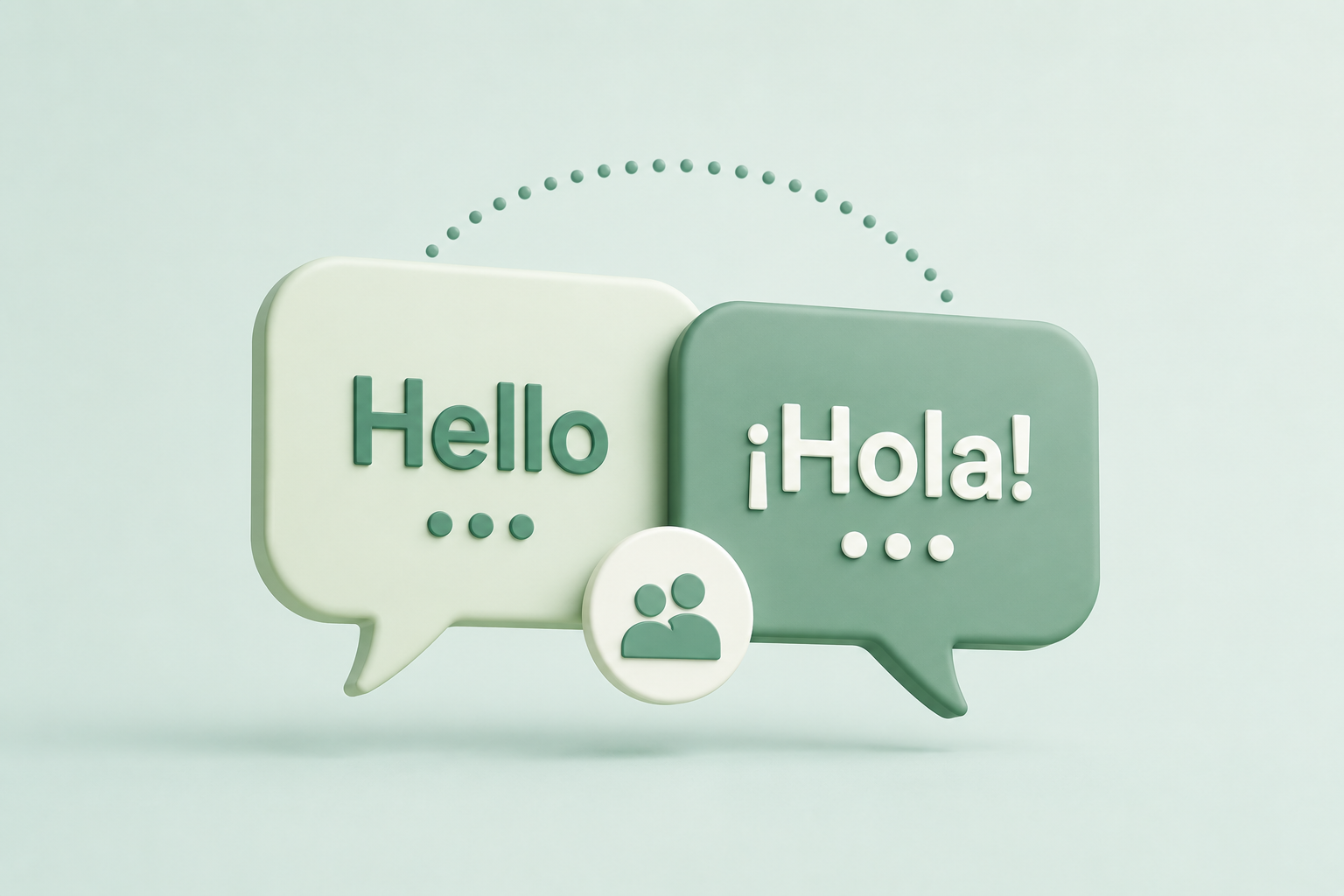
Roughly 1 in 5 US adults speaks Spanish at home, with concentration in Florida, Texas, California, Arizona, New York, Illinois, and growing in Georgia, North Carolina, and Tennessee. In metro Miami and metro Los Angeles the share is much higher.
Despite that, the vast majority of US catering operators handle Spanish-speaking buyers with a translated PDF menu, a Google Translate plug-in, or a sales rep who speaks halting Spanish. The customer experience is acceptable. It is not great.
The few operators who serve Spanish-speaking buyers fluently win that segment by default. There is no competition. This post explains why, and what fluent bilingual service actually requires in 2026.
How big is the Spanish-speaking catering market in the US?
The numbers, conservatively:
- ~42 million US adults speak Spanish at home (US Census, 2024)
- ~30 percent of those prefer Spanish for service interactions
- In Miami-Dade County, ~70 percent of households speak Spanish at home
- In Los Angeles County, ~50 percent
- Spanish-speaking US households spend an estimated $1.7+ trillion annually on goods and services
For catering specifically, the share of Spanish-preferred buyers is highest in family events, religious celebrations, and businesses owned by first or second-generation Latin entrepreneurs. In these segments, Spanish-language service is not a perk. It is a requirement.
Why is bilingual service still rare in catering?
Three structural reasons.
Staffing economics
A fluent Spanish-speaking sales rep or customer service agent costs roughly the same as an English-only one. But finding them, hiring them, and retaining them is harder, especially outside South Florida and South California. Most operators settle for partial coverage.
Software is English-first
Most restaurant software, CRMs, ordering platforms, marketing tools are built English-first. Even when they offer Spanish translations, the translations are mediocre. The buyer-facing experience reads as foreign.
Operators assume Spanish-speakers will translate themselves
The assumption is that bilingual buyers will just use the English version. Sometimes true. Often not, especially for senior buyers and corporate decision-makers who prefer their primary language for important purchases.
Which touchpoints matter most?
In order of impact.
1. The first inbound interaction
A buyer texts you in Spanish. If they get an English-only auto-reply or a fumbled human response, they leave. If they get a fluent Spanish reply within minutes, they stay. The first touchpoint sets the entire relationship.
2. The menu and pricing
The menu has to read naturally in Spanish, not as a translation. "Plato del día" instead of a literal translation of "Plate of the day." Cultural items named correctly (no "Spanish rice" when it is actually "arroz amarillo"). Pricing in the same currency conventions Spanish-speakers expect.
3. The order confirmation and receipt
The confirmation arrives in the language the order came in on. Receipt the same. Mismatched language signals carelessness.
4. The follow-up message
If the order was placed in Spanish, the follow-up is in Spanish. If sentiment is positive, the reorder offer is in Spanish. The full loop stays in language.
5. Phone calls and complaints
When things go wrong, language matters more, not less. A Spanish-speaking customer with a complaint who has to switch to English to resolve it leaves with a worse impression even if you fix the problem.
What does fluent versus translated actually feel like?
Translated:
"Hola! Gracias para su orden. Su entrega es programada para Martes a 11:30am. Si necesita cambiar algo, por favor responder a este mensaje."
(Reads stilted. Awkward preposition choice. Imperfect verb conjugation. Reads as a translation.)
Fluent:
"Hola, María. Gracias por tu pedido. La entrega queda lista para el martes a las 11:30 AM. Si necesitas ajustar algo (cantidad, hora, dirección), me avisas por aquí mismo y lo arreglo."
(Reads natural. Native conjugations. Culturally appropriate familiarity. Reads as if written by a Spanish-speaker.)
The difference takes 5 extra seconds to read and produces a measurably different customer relationship.
How does AI change the economics?
Until recently, fluent bilingual service required fluent bilingual humans. The 2026 reality is that modern language models produce native-quality Spanish across both translation and original composition. The economics shift dramatically.
Specifically:
AI handles the inbound interaction at scale
Ask AIA responds in Spanish to Spanish-language inquiries fluently, across text, WhatsApp, and email. No need for a Spanish-fluent rep in the loop for every interaction.
AI generates menu and marketing copy in both languages
Write the menu once in English, AI produces native-quality Spanish (and vice versa). Maintains brand voice in both languages without manual translation.
Human staff still needed for high-touch escalations
AI is excellent at order capture, follow-up, and most CRM work in both languages. For complex sales conversations and complaint recovery, a fluent Spanish-speaking human is still required. But that is one person, not a team.
The net effect: bilingual service that used to require a doubled headcount can be delivered with one fluent human plus AI. The cost of entering the Spanish-speaking segment drops by an order of magnitude.
Where the unfair advantage actually shows up
Three concrete places.
- B2B catering for Latin-owned businesses. This is a huge and growing segment in Florida, Texas, California. Most caterers cannot serve them well. The ones who can win the segment uncontested.
- Family events at scale. Quinceañeras, large family gatherings, religious celebrations. Higher AOV than corporate, often booked in Spanish even by bilingual families because the celebration itself is in Spanish.
- WhatsApp ordering. WhatsApp is the dominant messaging app in Latin households and many Latin-owned businesses. Bilingual WhatsApp support is rare in catering and disproportionately valued.
Key takeaways
- ~42 million US adults speak Spanish at home, with ~30 percent preferring Spanish for service.
- Most catering operators handle this with a translated PDF. Fluent Spanish service is rare and creates a quiet competitive moat.
- The five touchpoints that matter most: first inbound, menu and pricing, confirmation, follow-up, complaint recovery.
- Fluent reads native. Translated reads foreign. The difference is measurable in retention.
- AI changes the economics. A fluent bilingual operation no longer requires doubled headcount, just one fluent human plus AI for the bulk of interactions.
If you want to see what fluent bilingual catering service looks like across text, WhatsApp, and email, walk through Ask AIA or request a demo.