B2B
B2B vs B2C Catering: The Operational Differences That Change Everything
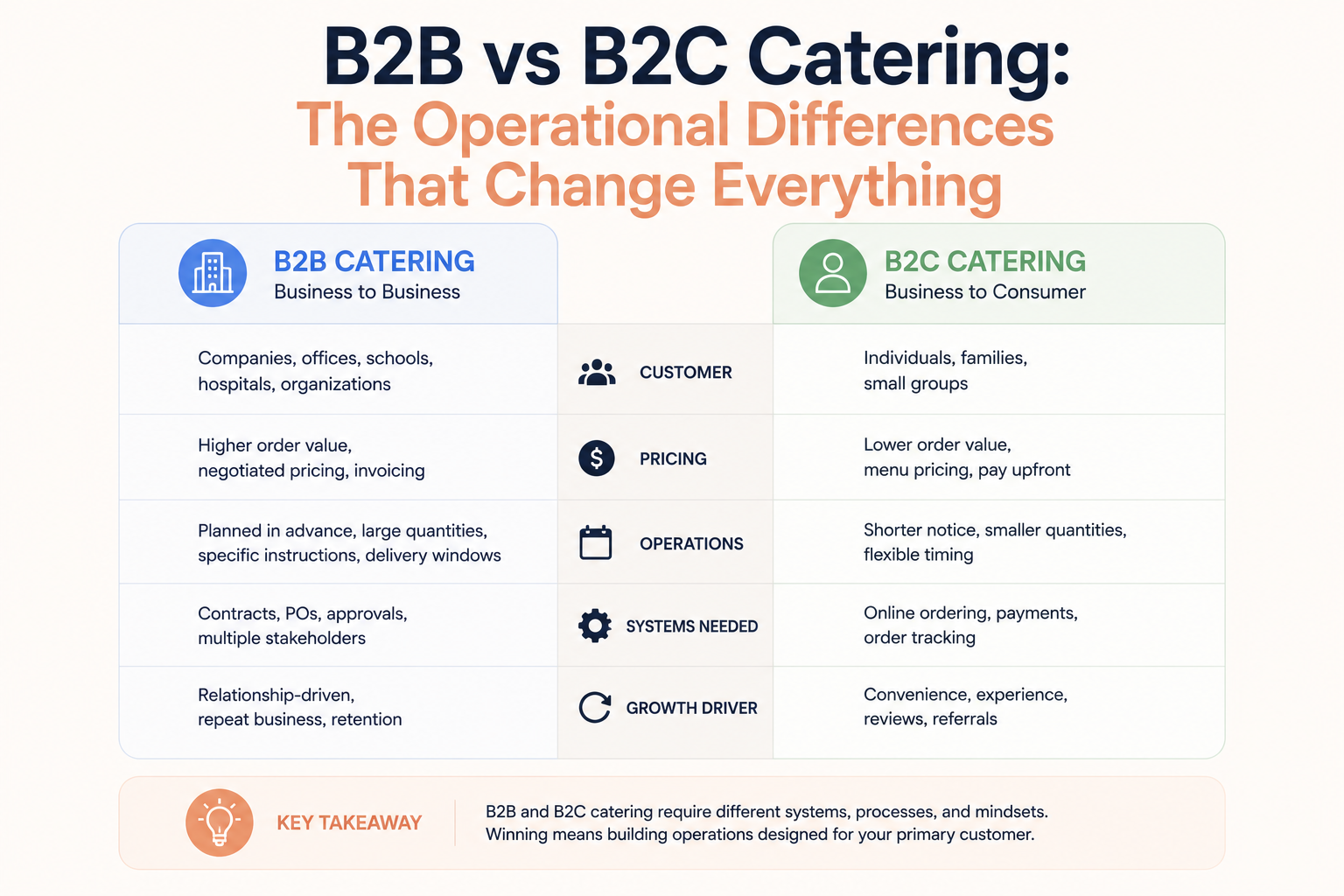
Most catering operators think of B2B (corporate, office, recurring contracts) and B2C (weddings, parties, family events) as two flavors of the same business. They are not.
The customer object is different. The pricing logic is different. The operational tempo is different. The systems that work for one usually fail at the other. Operators who try to run both with one process end up doing both poorly.
This post walks through the differences in concrete terms, then addresses whether you should try to do both at all.
What is the real difference at the customer level?
B2C: the customer is the person
One profile. One contact. One credit card. One delivery address (usually). One event, then maybe another in 6 months. Decisions are emotional and time-pressured (a wedding is a wedding).
B2B: the customer is the company
Multiple authorized buyers (office manager, executive assistant, HR). Multiple billing methods (corporate card, PO, NET 30). Multiple delivery locations (different floors, different offices, different cities). Recurring orders with predictable cadence. Decisions are rational, sometimes slow, often committee-driven.
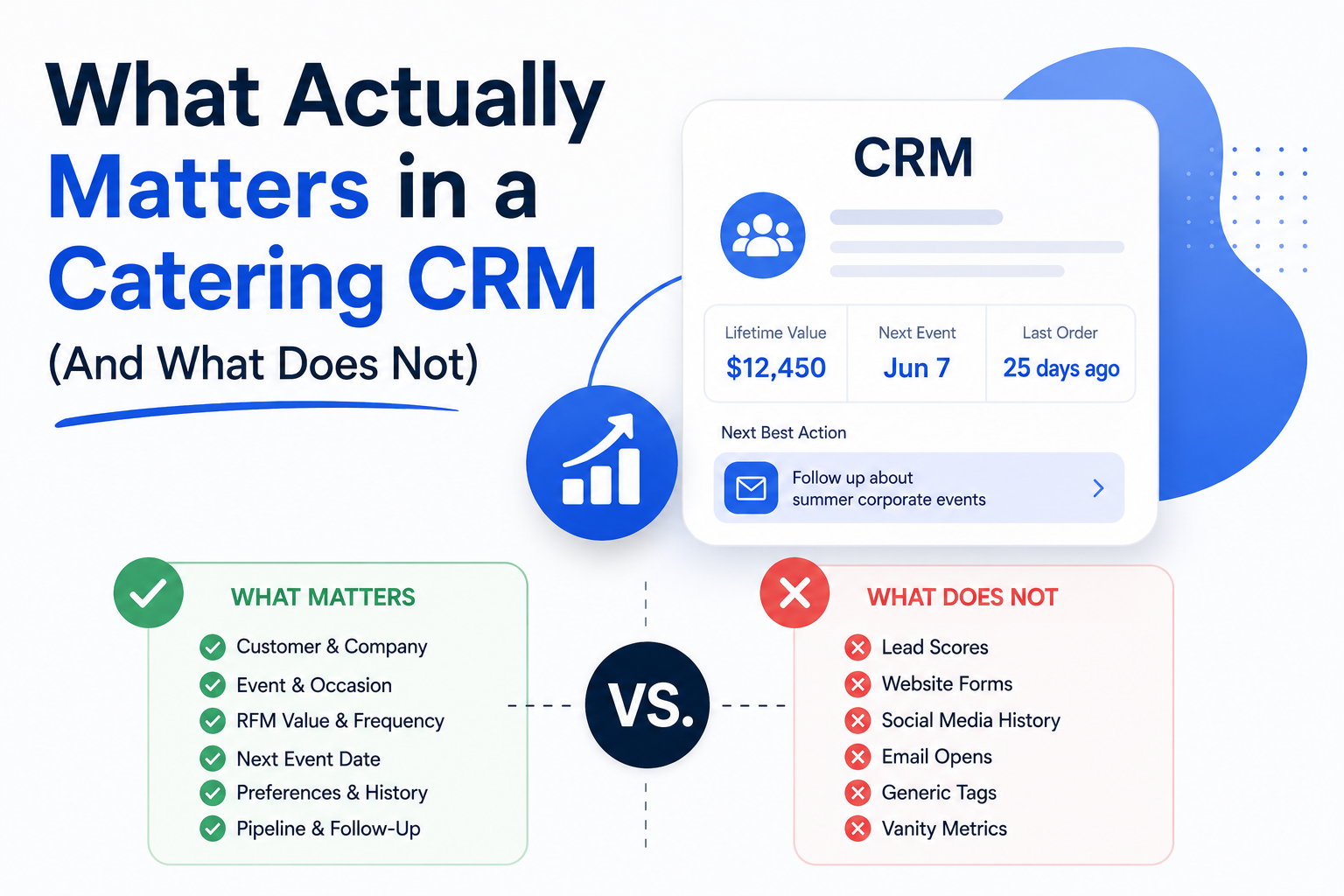
A generic CRM with only a Contact object cannot represent B2B. You end up with 4 individual contacts that share an address. The total value at the company level is invisible. The corporate relationship gets lost. Real B2B requires a Company object separate from contacts.
How does pricing differ?
B2C pricing
- Per-person pricing on packages
- Higher margin per order (15 to 25 percent typical)
- Less price-sensitive (it is an emotional event)
- One-time transactions
- Cash on delivery or credit card on book
B2B pricing
- Per-person at scale (volume discounts kick in fast)
- Lower margin per order (10 to 18 percent typical)
- More price-sensitive (procurement reviews quarterly)
- Recurring revenue (the real value is in the contract, not the order)
- NET 30, PO, corporate billing terms
In B2C, you charge what the customer will pay for a one-time experience. In B2B, you compete on total annual cost. The pricing logic is different enough that operators commonly maintain entirely separate menus.
How does operations differ?
Delivery and setup
- B2C: usually one delivery, often peripheral hours (Saturday evening). One-time setup with maximum effort.
- B2B: recurring deliveries during business hours (Tuesday 11:30am). Setup is faster, more standardized.
Customization
- B2C: high customization per event (specific menu, specific dietary, specific theme)
- B2B: standardized menus across recurring orders, with occasional variations
Communication
- B2C: high-touch in the lead-up to the event, dark after
- B2B: low-touch on each individual order, but the relationship is constant across many orders
Staffing
- B2C: requires hospitality-trained event leads and servers
- B2B: requires operations-trained delivery and logistics staff
What systems do you need for each?
The systems requirements diverge meaningfully.
B2C catering systems need
- Strong event-day project management
- Tasting and proposal workflow
- Photographic menu visuals
- Deposit and final-payment workflow
- Event-day staffing scheduler
B2B catering systems need
- Companies database (separate from contacts)
- Multiple authorized buyer per company
- Recurring order templates
- Corporate billing (PO, NET 30, tax-exempt handling)
- Account manager assignments per company
- Real-time delivery tracking visible to office managers
If your software stack only does one well, the other half of your business runs on spreadsheets. That is the most common failure mode I see at operators trying to do both with one tool.
Should one operation try to do both?
Yes, but with specific guardrails.
Most catering operations should run both. The reason: they smooth each other's seasonality. B2B is weekday business hours. B2C is weekends and evenings. Together they keep the kitchen busy across the whole week.
The guardrails:
1. Separate menus, ideally separate brand voice
The corporate weekly lunch program does not need wedding-cake-grade marketing copy. The wedding planner does not care about your office-lunch fleet pricing. Keep them visibly distinct.
2. Separate sales process
A B2B account is a 4-week consultative sales cycle. A B2C event is a 10-day reactive sales cycle. The same rep cannot do both well. Either dedicate reps or batch the work by day.
3. Common back-of-house, separate front-of-house
Kitchen, prep, sourcing, fleet should serve both. Sales, account management, marketing should be specialized.
4. Two separate dashboards
B2B metrics: customer LTV, retention, recurring revenue, MRR. B2C metrics: event count, AOV, season vs off-season, referral rate. Mixed dashboards hide both.
Key takeaways
- B2B's customer is a company. B2C's customer is a person. The data model has to support both.
- Pricing diverges: B2C optimizes for margin per event, B2B optimizes for total annual cost.
- B2B operations are tempo and consistency. B2C operations are event-day execution.
- Most catering operations should do both, with shared back-of-house and separate front-of-house.
- Separate menus, separate sales process, separate dashboards. Common kitchen.
If your CRM does not have a real Company object separate from contacts, you cannot run B2B properly. AIA does, and the difference shows up immediately. Request a demo to see how.