AI
AI Image Generation for Catering Menus: From Photo Studio to One Click
A professional food photographer charges $200 to $500 per item for menu-quality work. A typical catering operation has 60 to 120 menu items. The math gets ugly fast.
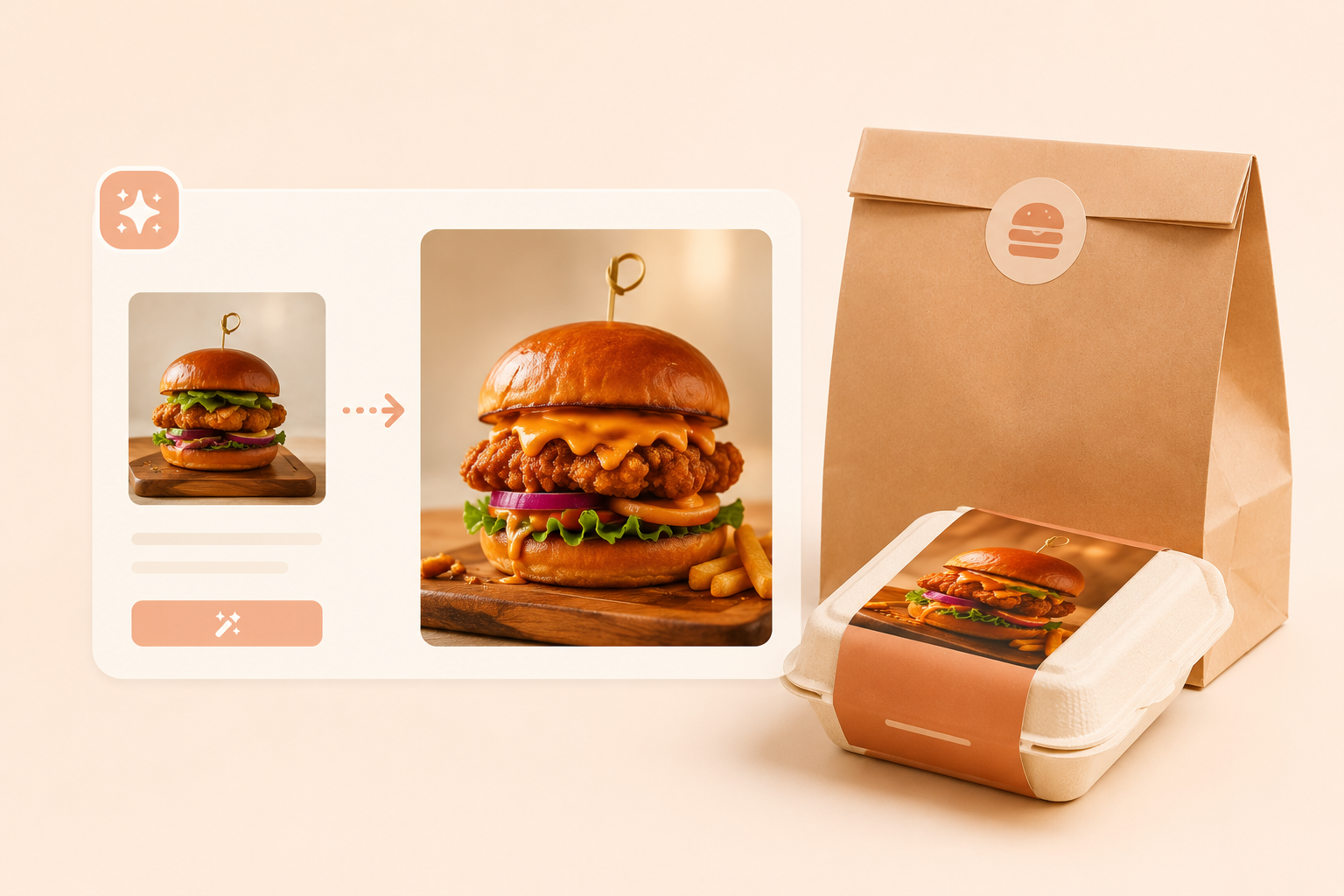
AI image generation in 2026 is mature enough to replace 70 to 80 percent of that work at near-zero marginal cost. Not chatbot-grade images. Photographic-quality plates of food that read as real to a buyer.
This post covers what is actually possible today, the prompting recipe that produces results, the situations where AI still fails, and where you should keep your photographer.
What can AI image generation actually do for catering today?
Three concrete use cases, all working in production.
1. Menu item hero shots
A chicken pinchos platter, a Mediterranean grain bowl, a corporate boxed lunch spread. AI generates photographic-quality images of each at any angle, on any background, in any lighting. Time per image: 30 seconds. Cost: pennies.
2. Seasonal and promotional variants
The summer rooftop version of your platter. The winter holiday version. The Valentine's Day spread. Generate variants in minutes without re-shooting.
3. Marketing collateral
Social posts, email banners, web hero images. AI generates branded marketing visuals on demand, on your color palette, with your typography.
When does it work and when does it fail?
AI image generation in 2026 nails:
- Plated food in studio lighting
- Buffet spreads at moderate distance
- Top-down food photography
- Food on neutral backgrounds (white, wood, marble)
- Stylized marketing visuals
It still struggles with:
Specific dishes you invented
If your signature item is unusual (a specific regional cuisine, an unusual ingredient combination), the model will approximate. The result might look good but might not match your actual dish.
Brand-specific packaging
If you need an image with your custom-printed clamshell or branded napkin, AI cannot replicate your specific packaging without a fine-tuned model.
People interacting with food
Human hands holding plates, customers eating, staff serving. AI gets close but often has subtle errors (fingers, faces) that read uncanny.
Tight close-ups of unusual textures
Very close shots of specific ingredients can look slightly off. A dramatic zoom on flaky pastry layers, for example.
How do you write prompts that produce real-looking food?
Five components in every good food image prompt. Treat each as a slot in a template.
Subject
What is on the plate. Be specific. Not "chicken," but "grilled chicken skewers with charred edges, served on a bamboo plate."
Composition
The framing. "Top-down 45-degree angle, shallow depth of field, the plate occupies 60 percent of the frame."
Lighting
The single biggest quality lever. "Soft natural daylight from the upper left, gentle shadows, no harsh highlights."
Style reference
A style anchor. "In the style of professional food photography for a high-end restaurant, photographic realism, magazine quality."
Avoid list
What NOT to include. "No people, no text, no logos, no plastic packaging, no garnish that looks artificial."
Put all five together and you get something like:
Grilled chicken skewers with charred edges, served on a bamboo plate with a small ramekin of garlic sauce. Top-down 45-degree angle, the plate occupies 60 percent of the frame, shallow depth of field. Soft natural daylight from the upper left, gentle shadows, no harsh highlights. In the style of professional food photography for a high-end restaurant, photographic realism, magazine quality. No people, no text, no logos.
Generate that. Iterate the lighting and angle until you get the shot. Total time: 5 to 15 minutes per item to get a polished result.
What is the cost difference vs traditional photography?
Traditional food photography for a 60-item menu:
- Photographer: $200 to $500 per item × 60 items = $12,000 to $30,000
- Plus food cost for each plate, plus styling, plus location
- Plus 2 to 4 weeks of scheduling and shooting
AI image generation for the same 60 items:
- Software cost: $20 to $50 per month for a quality image generation tool, or roughly free if you use one bundled into a platform like AIA's Tools
- Time cost: 60 items × 15 minutes = 15 hours of work
- Total: $50 to $200 in software, 2 days of work
The cost difference is roughly 100 to 200 times.
Where should you NOT use AI-generated images?
Three places.
Hero brand images of your team or location
AI cannot generate authentic photographs of YOUR chef, YOUR kitchen, YOUR delivery team. Those need to be real. They are also the most valuable trust signals on your site.
Specific dish images for a customer who asked for that exact dish
If a corporate buyer asks for a tasting photo of the specific package they ordered, AI is not appropriate. Photograph the real plate.
Anything where misrepresentation matters legally
Use care with images of pricing, packaging that does not match what you deliver, or ingredients you do not actually use. Marketing standards still apply to AI-generated images.
How AIA does it
AIA's Tools module includes built-in AI image generation. The interface is conversational: describe the item, AIA produces the image, you regenerate with adjustments until you have the shot. Generated images integrate directly into menu items and online ordering pages without uploading.
Key takeaways
- AI image generation in 2026 is good enough for 70 to 80 percent of catering menu and marketing imagery.
- Strong prompts have five components: subject, composition, lighting, style reference, avoid list.
- Cost compared to traditional photography: ~100x cheaper, ~10x faster.
- It still fails on specific signature dishes, brand packaging, people, and tight texture shots.
- Do not use AI for authentic team or location photography. That has to be real.
If you want AI image generation built directly into the menu and ordering tools, walk through AIA or request a demo.